
Issue:
Lebanon is a small country in the Middle East by the Mediterranean Sea with a population of 6 million people, where there is a mix of cultures and ethnic groups that have built up for more than 6,000 years. This diversity was used by the various political parties, seeking power, as means to instigate their followers against their brethren. Religious dominance and fear of persecution, led to a civil war that tore the country apart for 15 years. As with every war, Foreign countries with personal agendas got involved and took sides with the fighting parties. The civil war went on between 1975 and the 1990 which synchronized with other wars. There are always wars and conflicts going on in the Middle East, and the focus here is on the clash between Lebanon and Israel, which started when Israel was founded until our present day. During this period, two significant wars were well known, the first one was in 1982, which later turned into an invasion where Israel took over many parts of Lebanon, mainly in the south and this invasion lasted until the year of 2000. During that time, the Lebanese never stopped resisting to get their land back. Six years later another war went on, it’s known by the Lebanese as the July War, where the Lebanese claimed victory, and the Israeli forces announced it as loss. Until this day, both sides keep threatening each other, and the conflict never stopped. The resistance groups in Lebanon are the Lebanese National Army and other groups represented by political parties especially Hezbollah and Amal Movement which are Islamic Shite parties, that were involved in the wars.

Fighting back is not the only type of resistance that Lebanese used, they also excelled in expressing their refusal for oppression through their music. Most singers in Lebanon sing pop music, it’s the most popular and wanted type of music in that area. But, they also have been singing about this conflict since the eighties. They sang to support their country, people, and groups who are fighting back. They wanted to reach the world using music, and serve their country using their voices.
Singers who sang or have been singing about the conflict were supported by many Lebanese and non-Lebanese too. However, they have been facing a lot of problems by some neighboring Arab countries, non-Arab countries and even from their people in their own country.
A Singer You Should Know

She has been singing for her country and people since she was 14 years old, so she has become a revolutionary icon for them.
In the year of 2000, she was awarded by the president for her supportive songs.
Below is one of her early and most impactful songs associated with the Israeli invasion. It is noteworthy that the video is from a concert in 2018, about 30 years after the song was first published.
The sun of the truth has set and the dawn has become dusk
The face (literally, chest or front) of the east has split and the paths have closed off
We refuse to die
Tell them we shall remain
Your land, the homes and the downtrodden people
They’re all ours oh South, my beloved South
Justice has been crucified and is bleeding peace
What concern of ours is war?
We will remain here
When the whole universe comes to an end
And not a drop of your soil will be missing, oh South
Never fear misfortune, oh South
The trials of war, the torment of deprivation
Despite everything that has happened
The home shall remain ours
And the laurel tree will once again bloom with pride upon your earth, oh South
In 2006 after the 2nd war ended, she sang this song (Ahibai’, English: My Loved Ones) to the resistance groups. She donated the profit of this song, which was 3 million dollars, to those who lost their houses in the war.
As discussed earlier, Lebanese claimed victory in 2006. The war ended in 2006, but the Lebanese still reminisce until these days. In 2012, Julia sang (Muqawem, English: Opposer). In its lyrics, she addresses the enemies, saying that her people stopped them and will always do, but without mentioning any names.
Your glory was taint with humiliation and defeat
When the South stood up to resist
The history of dignity is wide awake
It’s writing in our land stories of triumphs
I’m the definition of Will when the word is employed
My sword hails your fall in every battle
Every single soul in my nation embraces resistance
Won’t settle for less than glory
Never bowed to humiliation, never bargained.
We triumphed despite your aggression.
Let the whole free world see,
How glory is made in nations.
My Perspective:
I can look at the situation and argue two major points, the music and the politics. Keeping up with our class themes and belief, I would like to emphasize the idea that music is a human right and people should be free to express their feelings using music, and be able to reach the world using their voice. In all the songs that I know, and the ones I found while doing the research, I saw that none of the songs’ lyrics have a word referring to the enemy’s name (Israel), person, religion, nor political group. When they sing for Lebanon, they don’t mention anything but their country’s name. Also, music doesn’t kill or hurt anyone, and nor do the musicians commit murder. So, nobody really has the right to blame them, ban them, or cause problems for them only based on their religion or political point of view. This is a normal reaction from people whose country is being attacked.
Finally, by looking at the whole picture of the conflict, I stand by the Lebanese side including the singers. Their country has been continuously attacked and taken over, which turned the conflict to an occupation lasting for years. Many people were taken and put in Israeli prisons. The singers were loyal to their country and people, they did their job, by writing songs and singing them, under no one’s name but their country. This is patriotism at its best.
Groups Supporting the perspective:
The groups here can be split to groups that support the perspective by looking at the political side and by looking at the music side. In terms of the conflict and the war, most of the Middle Eastern countries have the same point of views against Israel. It has been the first and most hated enemy there, especially after getting involved in many wars with some Arab countries. Therefore, music of resistance against this enemy sang by the Lebanese singers have been always published on these Arab countries’ media.
In terms of the music of the conflict, the strongest groups or stakeholders that can back these singers are the Lebanese people and government. Lebanese who love their country regardless of what the singer religion or the resistance groups religion are, and looking at the conflict as a conflict which the whole country is involved in, not only some groups. This being said, there are some people and politicians that believe that the war was between some parties and Israel, not Lebanon and Israel, using politico-religious beliefs as their reasoning. Lebanese people who support these singers out of love for their country have formed a fan base that is penetrable. They rose above all religious and political considerations and took these artists’ music to another level especially with the widespread use of social media these days. Julia’s over booked concerts are a prime example of the latter.
Groups that have a different perspective:
Because politics is game that is way bigger that music and basic human rights, international support wasn’t unanimous. USA, Qatar, Tunisia and Jordan are few examples of countries that have opposing perspectives. Their rationale off course differs, ranging from political, religious as well as personal.
The United States has always supported Israel as an ally in the Middle East. Their support hence was extended during both wars with Lebanon. Sticking to the music theme of the paper, the latter support affected musicians that were patriotic to their country. Many Lebanese singers are not allowed to enter the USA and are denied visas due to their stance. The embassy of the United States in Lebanon has told two singers, Melhem Zein and Maya Diab, that they are not authorized to enter the US because of their political point of view.


Qatar banned the Lebanese singer Melhem Zein in 2012, while his entire band was granted visas causing his concert to be canceled. According to him and to the media, he’s banned because of his political opinion. In one of his interviews he said that all he does is sing, why ban a singer? What kind of democracy from Qatar is that. Also, people and politicians in Jordan were trying to put pressure on their government to cancel Julia Boutros concert in Amman, because of her political views.
Here is one of Melhem Zein’s songs, supporting those who lost a lot in the wars, and for the situation of his country which is similar to many other countries in the Middle East.
Every time you hold something in your hand
Every time you see in your eyes
Every time you walk and stand
think of those who can’t do that anymore
A person who no longer has eyes
We heard his name in the news
he gave a part of his body
defending me and you
His veins bleed dreams
his hurts look like my country
from the war and the mines
resistant, soldier, and civilian
A wounded dream comes true by you
In the year 2000, Julia Boutros was supposed to have two concerts in Jordan when a governor opened a claim and banned one of her song to be published on TV or radio, because, as he claimed, she used some sentences right from the Quran in the lyrics of one of her resistance songs. That song was published 13 years before, and it was all over media. This governor was one of the Muslim Brotherhood people, who already thinks that music and singing is a sin, making the reason of the problem he created to be more as a religious reason.
Another groups that have totally a different perspective are those who don’t want to mix politics with music or anything else. For example, Tunisia, that doesn’t stand by the Israeli side but on the other hand it banned a famous singer. Marcel Khalife is one of the well-known Lebanese singers who had sang for freedom and resistance for years. His music was banned in the Tunisian TV and radios, and he was not allowed to enter Tunisia, because he mentioned the Lebanese prisoners in Israel in a song during one his concerts. There is not a direct reason making Tunisia just ban a singer like Khalife, but the fact they didn’t like music to be involved with politics.
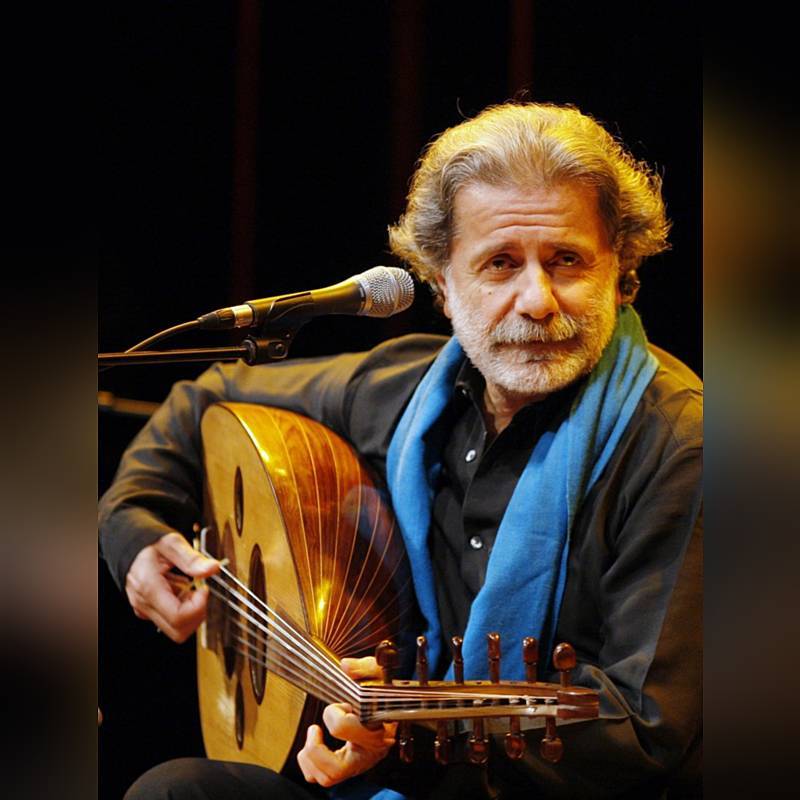
https://www.shazam.com/artist/40069279/marcel-khalife
Finally, there are some Lebanese who don’t believe that all Lebanon was involved in the wars, and it was only some political parties. Also, there are who dislike Julia Boutros for example for singing for freedom, and at the same time she is married to a governor, who’s one of the people responsible for corruption in Lebanon, some Lebanese think.
What’s next?
The political conflict has been going on since Israel was founded until present, and I think it won’t stop. Both sides raise their children and people knowing their enemy, generation after generation.
Due to that and to the continuous threatening between the two sides, Lebanese still make songs and sing about the conflict. In 2016, Julia Boutros again made a song called (Ehzar, English: Be Warned) talking to the enemies and warning them to not attack her country.
How would I turn a blind eye to you and you have fangs
You crush, destroy everything around you, you leave death and destruction behind you
Blind hatred in you root, increased my determination and hardness
But my nation is stood up, resist old and young men
Do not ever bother or foul me, be warned!
How to turn a blind eye and you lose conscience and right
You destroy, kill wherever you are and your crime reaps titles
When you came to my ground, you lost and received an answer and punishment
my nation is stood up, resist old and young people
Do not ever bother or foul me, be warned!
How do I respond? Where I think you got what you deserved
You know for sure that we have men who can crush you with dust
Some groups claim that there should be a solution by signing a peace agreement, but I think that this will not happen. Also, many Lebanese believe that this is not possible, and the end of Israel will be the end of the conflict. In term of the music problems, the Middle East has been always a stage for dramatizing life based on everyone’s religion or believes. Singers will always be facing problems, be banned, and hated by some groups of people to some extent. Due to the large variety of religions and politic parties and opinions in that area. If we want to focus on the religious reasons behind those problems, we find that some religious groups believe that music itself is Haram, which mean a sin, then what about if the singers belong to another religion, or singing under its name?. There’s a high chance that they will always make problems to those singers. If the media stops spreading hate all over the Middle East, educate people and open their eyes to the good side of music in general, and start defending music and musicians rights, it will be a good idea to try changing people’s minds to rethink and respect the right of the singers to express their feelings the way they want, and have the point of view they want, as long as they’re not getting involved in any war act.
 Human Rights, Music, & Resistance