
French and Czechoslovakian Movements Compared
The year of 1968 was a chaotic, yet socially necessarily time that has since pushed much of the world to more closely examine the conditions of existence. An unprecedented number of students and workers launched protests against their governments and institutions, that was driven by the desire of freedom, peace, equality and a better life. Countries such as France, Czechoslovakia, Germany, Mexico, Spain, Chile, United Kingdom, Egypt and many more waged a heavily resisted battle against the status quo. This article will explore the history of the movements, links between suppression of human rights, resistance of the state and public, as well as the musical expressions associated with the events.
Events of May 68′ Movement -France
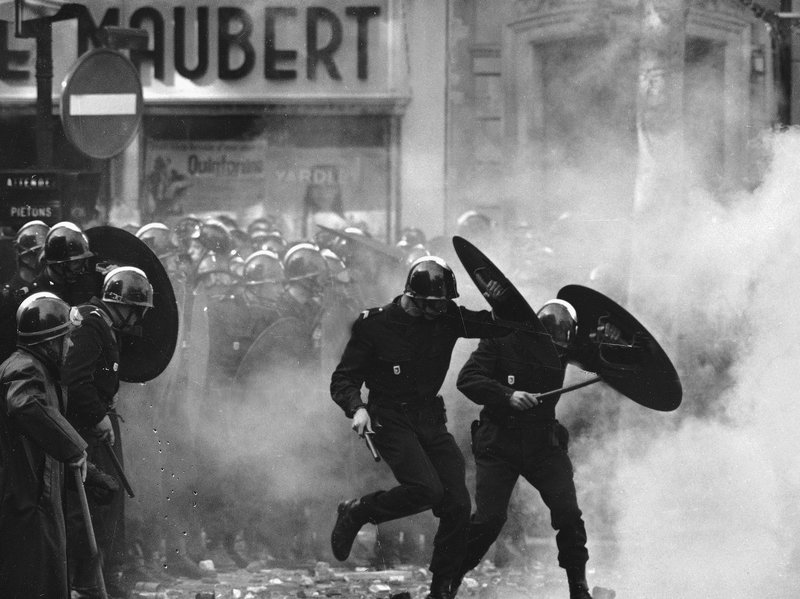
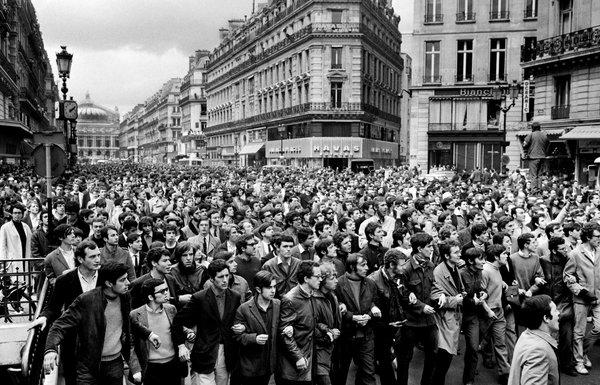
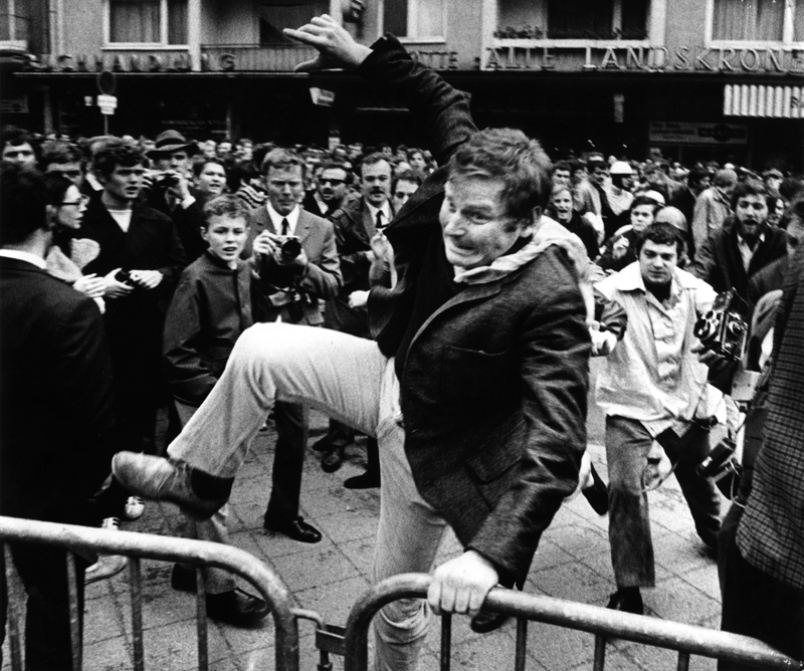
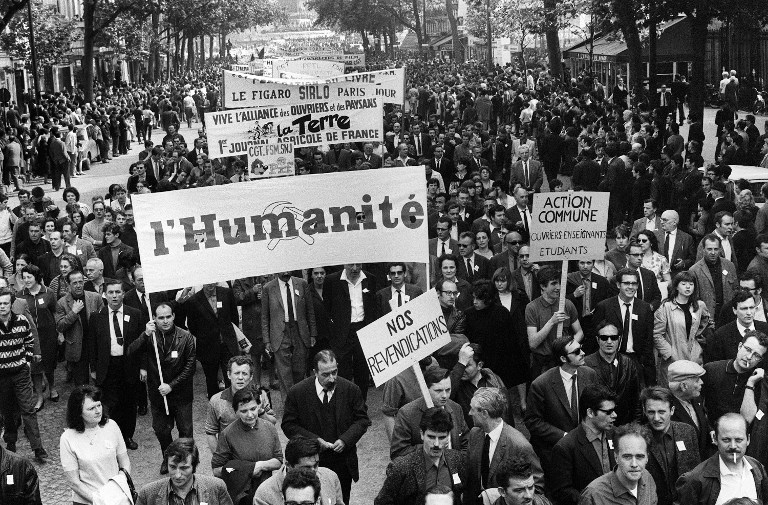
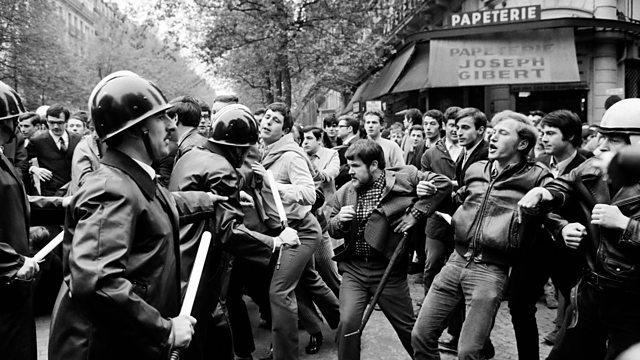
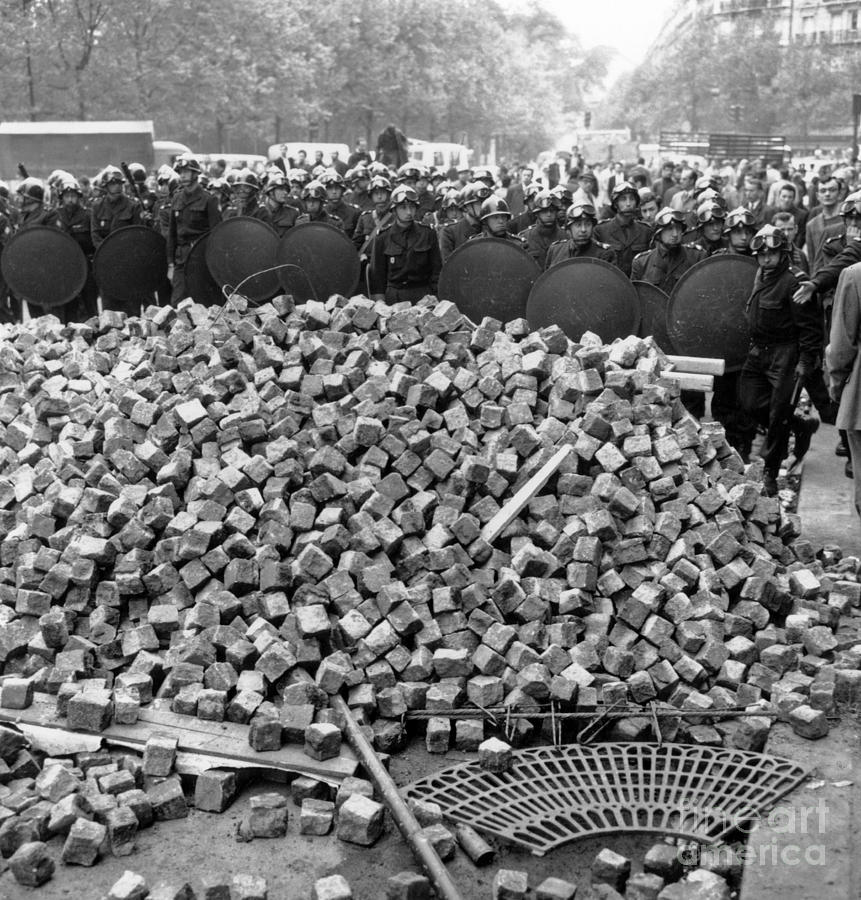
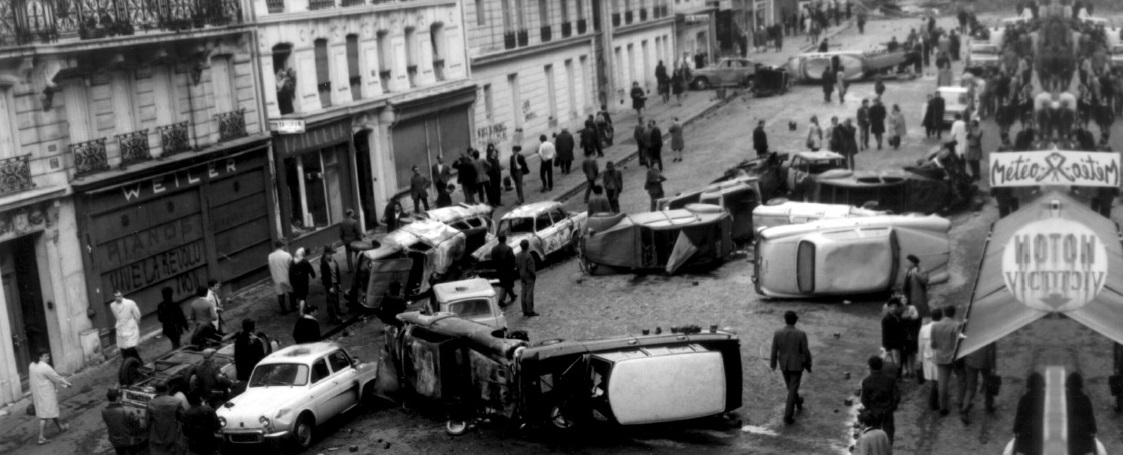
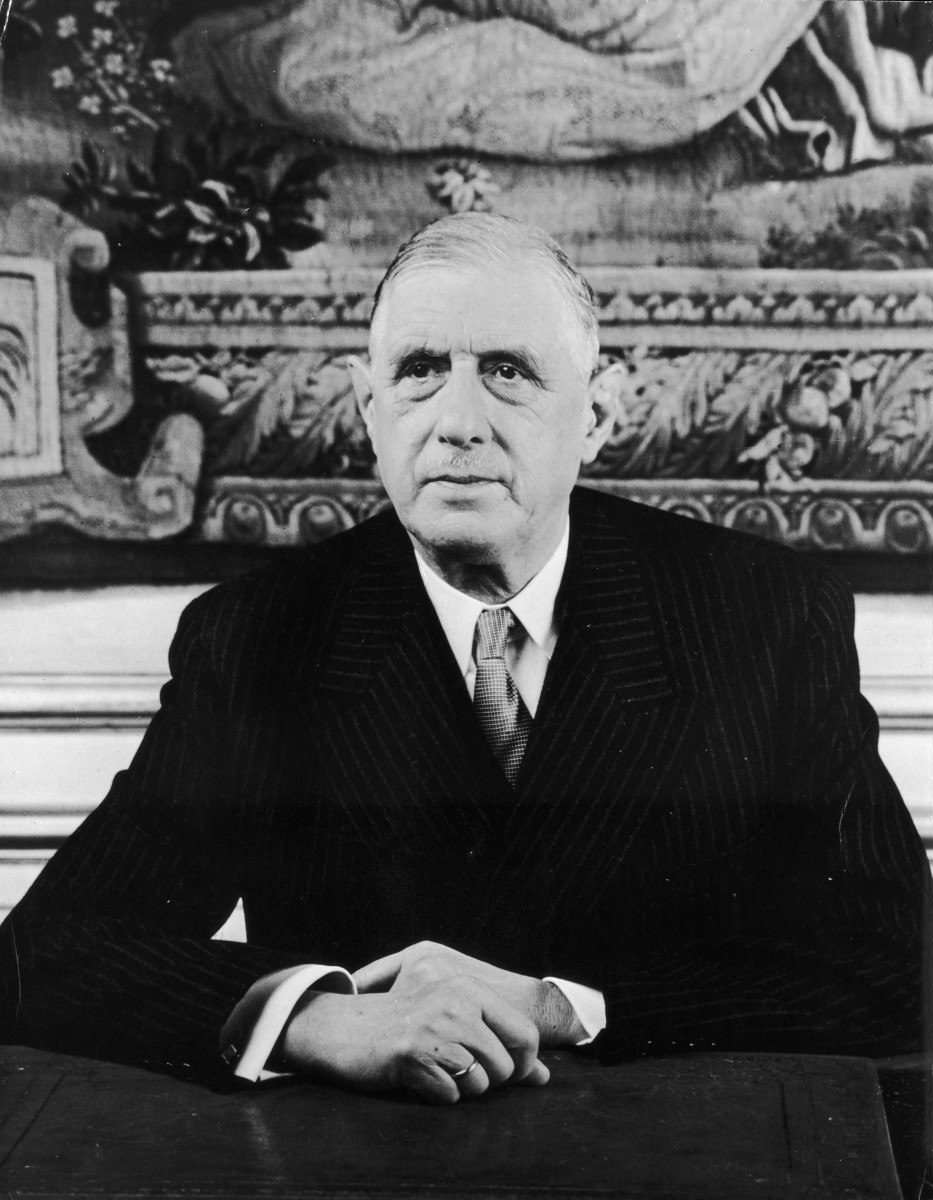
In 1968, television was in the early stages of connecting news from across the world in at close to real time. As the media covered the unrest happening around the world, France seemed to be immune to the chaos. It was French President Charles De Gaulle’s 10th year in power which was highlighted by achievements of economic expansion, political stability dramatic decolonization and international prestige. However, despite all his success, De Gaulle needed to do more than allow just stagnant stabilization, with student population rising a whopping 300% since he took office, over crowding became a serious problem. To address this he expanded university facilities, one of which was by building an extension of existing Sorbonne university in Nanterre.
Nanterre university was an American campus style school built in the slums of France northwest of Paris. De Gaulle’s intentions of modernizing France fell short in his failure to alter the outdated authoritarian style of education. Students at Nanterre came mostly from upper-middle class families, and were highly unsatisfied with their undiscerning campus. However, the physical flaws of the university was not the entirety of the students resentment, they also felt a lack of control over the social environment and their freedom of expression. These issues of course did not sit well with restless youth which lead to a majority of students demands for change at the university level, while a minority of students wanted radical change in the whole of society. These students opinions were fused by opposition to the Authoritarian Gaulleist regime and their support for radical leftist politics.
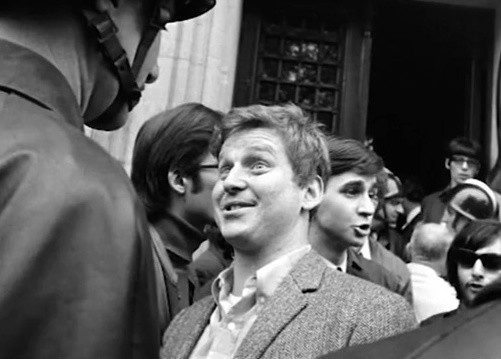
May 1968
In early May, students lead by young anti-authoritarian Daniel Cohn-Bendit, held a small protest at Nanterre to express dissatisfaction with the university’s ignorance of their concerns. The dean of the college promptly barred students from protesting on campus, a decision he likely regrets in hindsight. The next day students moved their frustrations to near by Sorbonne university in the heart of Paris. Students rallied to gather support for their social and political views of the french societal and institutional culture in anticipation of discipline for March 22 movement participants, who broke into the deans office to protest arrest of members of the Vietnam National Committee. The students rally was again attempted to be shutdown by the university, which was occupied by French police.
This time students would not allow themselves to be silenced, then took to the streets on May 3rd. This was their first physical confrontation with police, and started to resemble previous french revolutions. Students later held a rally at a meeting hall to spread their thoughts of leftism and communism. It included several outspoken speakers that denounced capitalism, imperialism, nationalism and french culture by comparison to more favorable communist ideologies, which gained an overwhelming support from the attending students.
May 10th, famously know as ” Night of the Barricades”, students took to the streets again and began rioting, they erected roughly 60 barricades, and violently battled with police in an exchange of cobblestones and tear gas. The public was favoring support to the students and disapproved of the polices brutality in attempts to break up the demonstration. Thirty- five thousand students were involved and about 400 people were injured during the riots, most of which were police.
Wildcat Strikers Join The Movement
On May 13th, French workers joined students in revolt in one of the largest general wildcat worker strikes in recent history. Workers, like the students felt an inability to voice their concerns, by majority they were considered low class, excluded from consumer culture and were frequently exploited by their employers. A quarter of all workers were receiving unsubstantial pay of less than 500 francs a month, contributing to growing loathe of capitalism from the working class. Trade unions were dropping in popularity since the end of World War II for their insufficient ability to bargain on behalf of members. Immigrant workers from decolonized French countries were typically treated the worst because most lacked union representation and were more easily persuaded by false propaganda.
Strikes were growing increasingly common in the years before the wildcat strike among french worker. Worker strikes in Rhodiaceta and Saviem industrial plants had worker attendance of almost 15 thousand, as well as the nearly the 80 instances of industrial action at Renault Billancourt auto plant in the months before the May movement.
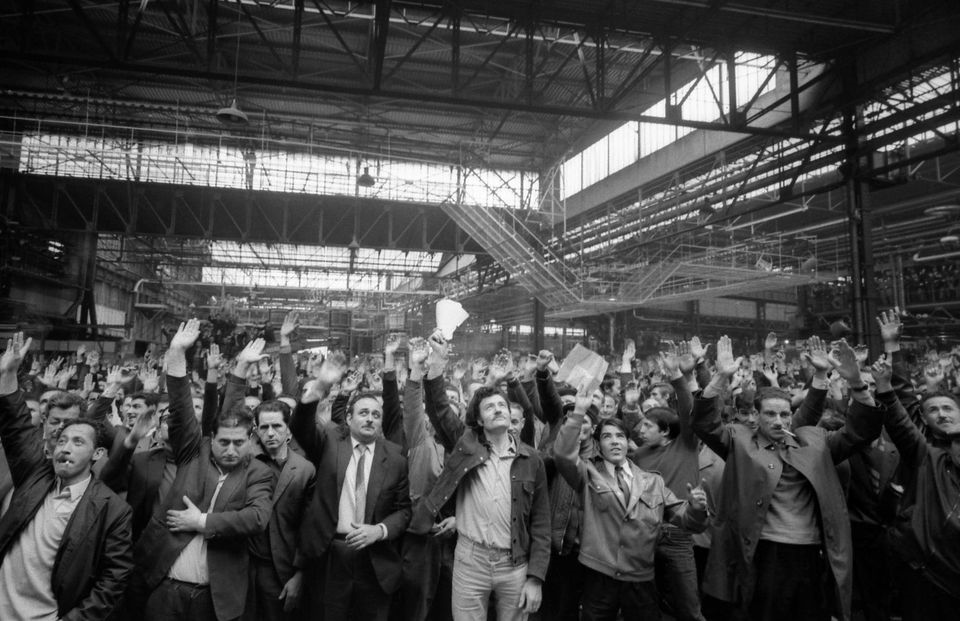
Once workers felt united in solidarity by the students movement, piece by piece, workers of a variety of different industries occupied their workplaces. First on the 14th by Sud-Aviaton and Renauld plants in Cleon, Fins, Le Mans, and Bolulgne, and continued like wildfire as most of industrial Normandy, Lyons and Paris shut down a couple days later. On the 18th of May, coal production, public transportation, national railways, gas and electric companies employees went on strike. By May 19th, 122 factories had been occupied. Strikes continued to grow, gaining around 10 to 12 million workers in total from vast diversity of trades who demanded better conditions and pay. Police were forced to abandon the Latin Quarter and let revolution continue virtually unopposed.
Students then proceeded to occupy Sorbonne and held massive meetings to reject expertise, hierarchy, academics, and political neutrality. The students examined role of students in university as well as role of university in society. In these meetings students shared ideas on various topics of intellectual thought pertaining to how they thought society should address sociopolitical issues. Although even with the multitude of discussions, students were not able to determine a solid, unshakeable action plan to solve their concerns.
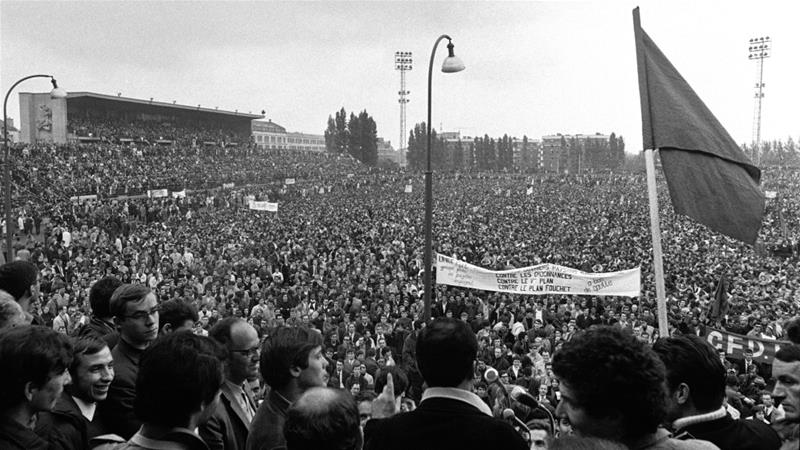
Workers and students gather at Stade Sebastien Charlety in Paris on May 27, 1968
Workers, some through cooperation with their unions, stated their individual goals for reform in their respective firms. These demands varied significantly depending on workers situation. Citrons workers had notably poor working conditions and worker-provided living quarters where they were treated inhumanly; They made demands for better conditions at work, in their company hostels, wage increases and increased personal freedom. Other workers such as the ORTF or French television and radio workers sought forty hour weeks, lower retirement age, repeal of the anti-strike laws of 1963, Minimum wage of 1000 francs a week and to end the government’s involvement in the media.
Outcome
De Gaulle in desperation, at the end of May promised to increase industrial minimum wages by 35% and by 10% to all other sectors of workers. After the dissipation of protests in early June, De Gaulle held an emergency election in which he won by a surprisingly large majority. Unions reasserted their roles in protecting and fighting for worker rights, not just justifying the workings of capitalism at workers the expense. In the months after, Government worked diligently to clean up damage, and put the revolution behind them. The goal of the protests was not to replace the government, but to replace social conventions, and improve standard of life among the low class. Students saw differences in social culture at university, workers saw very minimal to extreme changes in their work environment and pay depending on their employer. Over the next decades society embraced a more progressive culture that lead to many social developments and achievements.
Czechoslovakia and the Prague Spring
Czechoslovakia, along with numerous other eastern European countries, was liberated from the Nazi control in 1945 by Soviet forces who after the end of world war II, gained control of the country. The USSR oversaw the installation of pro-Soviet governments in many of the areas it had taken from the Nazis during the war. In 1948, a soviet lead coup overthrew the democratic governments of Czechoslovakia, eliminating political opposition to communism which soon conquered the country. Under soviet rule, eastern bloc countries found themselves stripped of their rights and forced into a highly censored, socialist state. The Soviets made decisions about all aspects of the public role in society, and inserted themselves in political, economical and industrial operations.
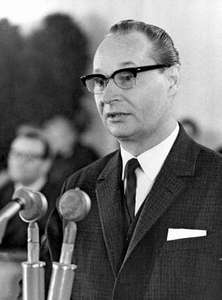
In 1968, a man named Alexander Dubcek became First Secretary of Czechoslovakia and had favorable support from both Soviet leaders and the public. Shortly after gaining control, enacted policy for reform he coined as “socialism with a human face”. The goal of this reform was to find a sociopolitical balance between criminal capitalism and the stupidity of socialism. His reform also included a long desired loosening on social restrictions such as censorship and increased personal freedoms. From January to August 21st of 1968, Czech citizens took full advantage of their newly granted freedoms through music, art, literature, media, theater and film. Television and radio, which normally went through several editors (local -state- federal), was given increasingly more freedom of press to report on stories that normally would have never been allowed. Film and theater were able to use their creativity in their creation and content, which was sometimes used to poke fun at communists. Music went uncensored and was allowed to express their ideas and emotions freely.
In August, Dubcek was taken from Czechoslovakia to meet with soviet leaders where they tried to convince him to end the Prague Spring and to normalize the country. Dubcek was being outright threatened during discussions but was not easily persuaded to denounce his decisions. He eventually felt like he was being backed into a corner and was being given no choice but to return home and restore the country. During this time, soviets sent the military in to occupy the country and end Prague spring.
Occupation of Prague
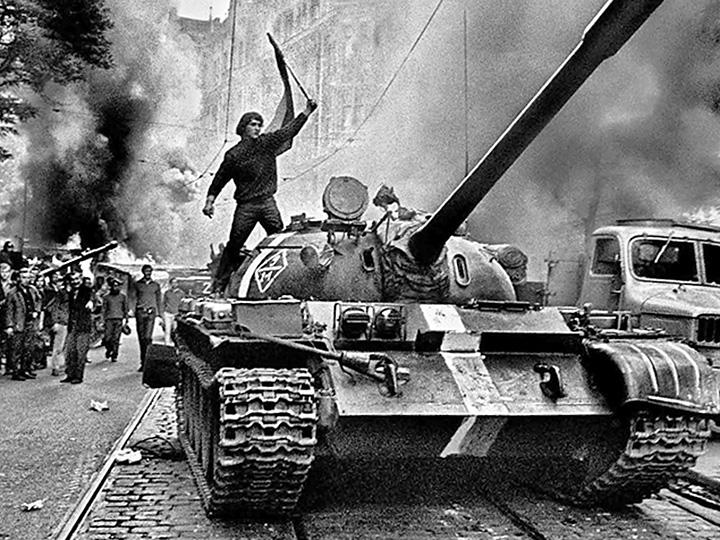
Troops were ordered to invade and occupy the city of Prague and eventually the whole country. When word broke of the invasion, media immediately began warning public to not confront troops and diligently reported what was going on outside in the streets. Soviet troops first goal was to attack radio and television stations to shut down communication. They were met with heavy resistance from the public who built barricades in efforts to slow them down, their non compliance lead to troops using deadly force. After a night of chaos, the soviets had successfully seized the city of Prague and continued to until the whole country was occupied.
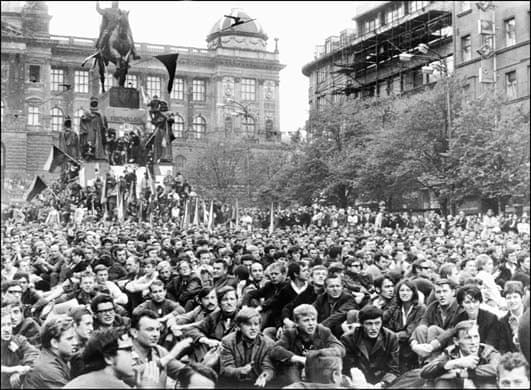
By the time Dubcek returned, spirits were crushed, it was apparent that the Prague spring was a complete political debacle and people felt that resistance was now useless. Most artists, writers and musicians fled the country to the west to avoid normalization. Dubcek along with other Czechoslovak leaders, is forced to sign the Moscow Protocol, a document outlining soviet expectations, promises to protect socialism in Czechoslovakia and normalize the country.
Prague Spring and May of 68′ Movements Examined
It is well known there is a tendency for the youth to be hesitant to willfully conform to the power and authority of previous generations without being given the chance to form their own unique opinions. In the examination of students reactions in democratic France and communist Czechoslovakia, we should all be reminded never to underestimate the power youth holds when confronted with intellectual and social repression.
At the surface, with basic understanding of these two movements, they can be wrongfully simplified as misguided, anarchist scholars in France and an epic failure to overthrow communism in Czechoslovakia, yet the significance goes much deeper. Most analysis of these two movements tends to oppose the idea that they have any significant commonalities, an easy assumption when you view them from a macro political, geographical or outcome oriented standpoint. However, struggles of Czechoslovak and French students were not all that dissimilar.
In each case, students were subject to a top-down government which discredited them as not having the capacity or intelligence to think for themselves, let alone start a revolution. Governments attempts to impose its will on students while expecting a sustained insouance were eventually met with with the opposite.
Examples of this were apparent before the rise of either student spring such as in October 1967 when Czechoslovak students retaliated in the Strahov district over unreliable lighting and power. They were met with heavy police resistance lead to unprecedented openness from press and universities, condemning the over aggressive police intervention. In France, student frustrations of sexual tensions were ignored by university and society who refused to allow discussion of the topic. In this time sex was considered a taboo, students were often separated by gender, contraception and premarital sex did not have a place in traditional french customs. French student grew increasingly tired of accepting this during their protest on dormitory restrictions in 1967, a year before their revolution.
These social frustrations paved way for students to politicize themselves in opposition to their governments ideologies which they saw as the root cause for their vexation. Students however were not the only group in the community who shared these divergences of the states authority, just the only ones restless enough to challenge them. This is why in each case students were not the sole antagonists against bureaucracy, but the catalysts that united the majority of the country to resist in solidarity.
The Impact of Music
In any protest movement of a charismatic nature, music is an integral to the free expression of the people’s emotions. Musicians in France and Czechoslovakia did their part before, during, and after their movements to spread awareness and a common sentiment of progressivism and activism that remain timeless.
In Czechoslovakia, bands like The Matadors, Blue Effect and Olympic adopted the westernized musical culture of psychedelic rock in the mid 1960s. They were some of the first to introduce this genre and helped to popularize it during the creative freedom allowed by the Prague Spring. The influence of the American hippie movement on Czech youth made its biggest impact when a band called the Plastic People of the Universe was inspired by American band Velvet Underground. The Plastic Peoples’ claim to fame in Czechoslovakia was due to their non-conformist attitudes and rebellious spirits that lead an underground resistance throughout the twenty years after the Prague Spring until the Velvet Revolution in 1989. Their underground efforts after the Prague spring was aimed at breaking down the communists hold on culture which infected those who listened. The Plastics oppression defiant personality can be summarized by a statement from band member Vratislav Brabenec who said “The worst insult is if you ignore someone. While you’re arguing with someone, while you’re objecting to them, you’re still in some sort of dialogue. We acted as though the communists didn’t exist. That, of course, pissed them off.”. As rebellious and influential as they were, there music typically lacked any kind of poetic attacks on the regime, however musician and composer Karel Kryl filled in on this aspect of Czechoslovak protest music.
Kryl was a music artist who wrote ballads before and after the occupation of prague, one of which, “Bratricku, zavirej vratka“ or “Little Brother, Close the Door” contained poetic lyrics that vividly described what it was like to live in Czechoslovakia during occupation. Although he was exiled a year after the Spring in 1969, his songs were sold and secretly distributed throughout the country as a close hearted reminder of the year of 1968.
France on the other hand, had a great deal of freedom to express their views in song without the fear of government retaliation, after the lift of censorship in 1962. Their rock scene developed around that time and had been evolving alongside the English and American rock scenes in French cabarets. Developing French artists used these scenes to play their songs that not uncommonly embraced communist ideas. The song that is most often associated as the soundtrack of the riots is Creve Salope by Renaud, which through examination of translations, easily depicts the extreme hostility demonstrators felt in 1968. Songs such as Paris Mai, ‘L’Été 68’, ‘Paris, je ne t’aime plus, ‘Amour Anarchie’ as well as others exemplify the sociocultural epoch of May 68’ that contributed to the the beginning of a global social progressive that continues on today.
The French movement in 68′ drew attention and inspired two of the most popular bands of the era to share their views. John Lennon of the Beatles and Mick Jagger of the Rolling Stones both wrote songs about the french student movement, however it appears they do not share the same sentiments toward the insurrection.
Mick Jagger was a fan of revolution and anarchy. He was inspired by the remarkable amount of demonstration that took place in and was ashamed at the weakness of the London protests in Grosvenor Square. For this he wrote a song called Street Fighting Man that called London a sleepy town with no place for a street fighting man. Jagger, like many youth in 68′ were very caught up in the moral outrage of global events, yet had now real plan for change.
John Lennon in late 1968, decided it was time to express his opinion, according to Rolling Stone Lennon said “I had been thinking about it up in the hills in India. I still had this ‘God will save us’ feeling about it, that it’s going to be all right (even now I’m saying ‘Hold on, John, it’s going to be all right,’ otherwise, I won’t hold on) but that’s why I did it, I wanted to talk, I wanted to say my piece about revolution. I wanted to tell you, or whoever listens, to communicate, to say ‘What do you say? This is what I say.”.10 He did this by writing the song “Revolution”, in this he wrote about his indifference to students communist ideologies, violence, and students intuition of leading a government takeover. Lennon leaned heavily towards the idea of world peace therefore his song Revolution was actually more of a anti-revolution song.
Conclusion
1968 was truly a remarkable year in the fight for progress towards freedom from tyranny, and social equality, not only in France and Czechoslovakia, but globally. Participants of each movement acted in a manner they deemed appropriate in the efforts to see the change society as a whole agreed was necessary. In these cases, the outcomes were not as spectacular as the demonstrations, but through patience and hard work, each country was eventually able to break off the chains that kept them from moving forward. Movements like these, are an essential tool of the oppressed to fight against abusive power and redress the balance.
William Allen White – “In several educational institutions during the last few years manifestation of student activity in riots has been exciting the country. To the conservative mind, these riots bode no good. As a matter of fact student riots of one sort or another, protests against the order that is, kicks against college and university management indicate a healthy growth and a normal functioning of the academic mind.
Youth should be radical. Youth should demand change in the world. Youth should not accept the old order if the world is to move on. But the old orders should not be moved easily -certainly not at the mere whim or behest of youth. There must be clash and if youth hasn’t enough force or fervor to produce the clash the world grows stale and stagnant and sour in decay. If our colleges and universities do not breed men who riot, who rebel, who attack life with all the youthful vim and vigor, then there is something wrong with our colleges. The more riots that come on college campuses, the better world for tomorrow.”
WILLIAM ALLEN WHITE,
“Student Riots,” editorial, The Emporia (Kansas) Gazette, April 8, 1932.—White, Forty Years on Main Street, comp. Russell H. Fitzgibbon, p. 331 (1937).
https://www.bartleby.com/73/157.html
References:
Angelopoulou, Maro. “Anarchy in the E.U: The Music Legacy of May 1968.” Europavox, 22 May 2018, www.europavox.com/news/anarchy-in-the-eu-the-music-legcy-of-may-1968/.
Burley, Leo. “Jagger vs Lennon: London’s Riots of 1968 Provided the Backdrop to a.” The Independent, Independent Digital News and Media, 22 Oct. 2011, www.independent.co.uk/arts-entertainment/music/features/jagger-vs-lennon-londons-riots-of-1968-provided-the-backdrop-to-a-rocknroll-battle-royale-792450.html.
Channel, World Documentary. YouTube, YouTube, 1 Apr. 2014, http://www.youtube.com/watch?v=ersgPFN0onQ.
“Daniel Cohn-Bendit.” YourDictionary, n.d. Web. 23 March 2019. <http://biography.yourdictionary.com/daniel-cohn-bendit>
Duhan, John. “Western Michigan UniversityScholarWorks at WMUHonors ThesesLee Honors College12-6-2013Vive Le Proletariat: The 1968 Revolt of FrenchWorkers and Students.” Scholarworks, Scholarworks, 12 June 2013, scholarworks.wmich.edu/cgi/viewcontent.cgi?article=3381&context=honors_theses.
Editors, History.com. “NATO.” History.com, A&E Television Networks, 14 Apr. 2010, www.history.com/topics/cold-war/formation-of-nato-and-warsaw-pact.
“France in 1968.” Europopmusic, www.europopmusic.eu/Newsletters/Features/Protest_68/1968_in_France.html.
Girgenti, Guido. “Global Nonviolent Action Database.” Global Nonviolent Action Database, 24 Feb. 2019, nvdatabase.swarthmore.edu/content/polish-students-reject-censorship-and-repression-1968.
Jarnikova, Tereza. “The True Story of the Velvet Underground in the Czech Underground.” Matador Network, Matador Network, 16 Nov. 2013, matadornetwork.com/change/the-true-story-of-the-velvet-underground-in-the-czech-underground/.
Maass, Alan. “1968 And the Prague Spring.” SocialistWorker.org, 5 Aug. 2008, socialistworker.org/2008/08/05/1968-and-prague-spring.
Matthey, Paul. “1968 : The Year of Two Student Springs -Czechoslovak and French Movements Compared- (May 2012).” Academia.edu, www.academia.edu/4386028/1968_The_Year_of_Two_Student_Springs_-Czechoslovak_and_French_Movements_Compared-_May_2012_.
O’Hagan, Sean. “Sean O’Hagen on the Riots and Protests of 1968.” The Guardian, Guardian News and Media, 20 Jan. 2008, www.theguardian.com/world/2008/jan/20/1968theyearofrevolt.features.
Reed, Ernest. “May 1968: Workers and Students Together.” May 1968: Workers and Students Together | International Socialist Review, isreview.org/issue/111/may-1968-workers-and-students-together.
Rubin, Alissa J. “May 1968: A Month of Revolution Pushed France Into the Modern World.” The New York Times, The New York Times, 5 May 2018, www.nytimes.com/2018/05/05/world/europe/france-may-1968-revolution.html.
Songfacts. “Revolution by The Beatles.” Songfacts, www.songfacts.com/facts/the-beatles/revolution.
Steeran, Dermont. “France: The General Strike of 1968.” The Anarchist Library, 1 Jan. 2005, theanarchistlibrary.org/library/dermot-streeran-france-the-general-strike-of-1968.
Steven. “General Strike: France 1968 – A Factory by Factory Account.” Libcom.org, 21 Dec. 2009, 17:12, libcom.org/library/general-strike-france-1968-factory-factory-account.
“The 10 Best Songs to Remember the ‘Prague Spring.’” Prague Morning, http://www.praguemorning.cz/the-10-best-songs-to-remember-the-prague-spring-9q2kiGHEqi.
Velinger, Jan, et al. “A Brief Look at ‘Protest’ Music plus the Underground Scene in Czechoslovakia from 1968 – 1989 | Radio Prague.” Radio Praha, 17 Nov. 2004, www.radio.cz/en/section/special/a-brief-look-at-protest-music-plus-the-underground-scene-in-czechoslovakia-from-1968-1989.
Wolin, Richard. “Events of May 1968.” Encyclopædia Britannica, Encyclopædia Britannica, Inc., 19 Sept. 2017, www.britannica.com/event/events-of-May-1968.
YouTube, WocomoHistory, 19 Apr. 2018, http://www.youtube.com/watch?v=_bVZMnQOHKw.
 Human Rights, Music, & Resistance