

Aboriginal music in Australia showcases various artists and their views on different subjects that have happened throughout their lives such as discrimination, politics, human rights, and the government. This blog post examines events that have shaped the aboriginal music culture and the musicians’ strength/determination to continue to make music despite the underappreciation. There have been songs, concerts, and musical films created to showcase the importance of the Aboriginal community in Australia.
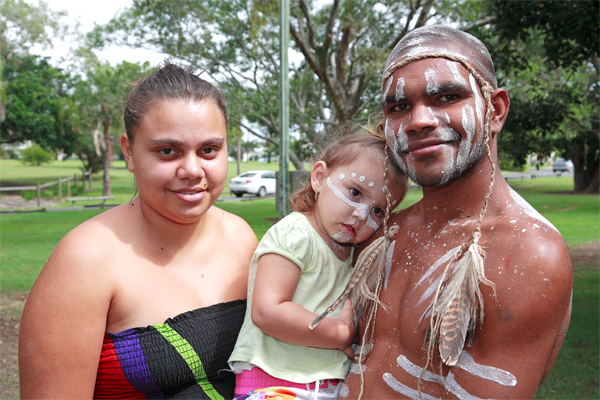
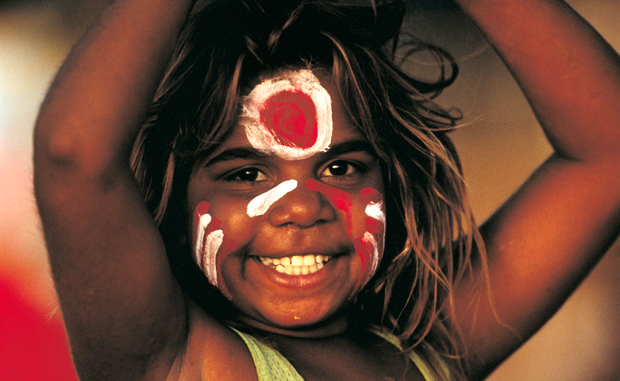
Aboriginal people are indigenous people from the Australian main lands. Aboriginals first came to Australia about 45,000 years ago. Unfortunately, Aboriginals’ land was invaded by Britain in the 18thcentury. Before the invasion, Aboriginal people lived in communities with a managed environment and a steady supply of food. In the 21stcentury, over fifty percent of Aboriginals live in towns with terrible conditions. The most common job for Aboriginals are being laborers on cattle ranches where their land was taken. The loss of land had a strong negative and social impact (International, 2019).
In an interview provided by survivalinternational.org, an Aboriginal man shared the impact the invasion had on the community. He said,
“By dreaming we mean the belief that long ago these creatures started human society, they made all natural things and put them in a special place.
These dreaming creatures were connected to special places and special roads or tracks or paths. In many places, the great creatures changed themselves into sites where their spirits stayed.
Aboriginals have a special connection with everything that is natural. Aboriginals see themselves as a part of nature … All things on Earth we see as part human. It is true that people who belong to a particular area are really part of that area and if that area is destroyed they are also destroyed.”
International, S. (2019). Aboriginal people. Retrieved from https://www.survivalinternational.org/tribes/aboriginals
Their land is a part of who they are. It brings them together and ultimately, brings the community together. Lastly, the land can be seen as a safe place for Aboriginals especially when discrimination is occurring.
Eryk Bagshaw wrote about six graphs that express the discrimination towards Aboriginal people in Australia. This article was written for The Sydney Morning Herald. In the beginning of the article he stated that, “One in five Australians would move if a person of Aboriginal or Torres Strait Islander descent sat next to them, and the same percentage would keep an eye on an indigenous person if they were shopping (2014).” This just shows that Aboriginal Australians and people of color are seen negatively in the public. It is a shame that this happens, but the songs give musicians and listeners a chance for their voices to be heard. Eryk Bagshaw continues to say that “More than one in three young Australians also believe that indigenous people are lazy and have been given an unfair advantage by the government (2014).”
One of the graphs that Eryk Bagshaw featured was titled, “Is moving away from an indigenous Australian a discriminatory act? 46% said no and 54% said yes out of 100 people surveyed. He didn’t include the demographics for this survey. We will not know how many indigenous people were surveyed. The amount of discrimination and racism that is not only in Australia, but in the world, can lead to many people experiencing depression and anxiety to go out in the public eye. It shouldn’t be like this because they cannot change how they were born. Lastly, 29 percent of people believe that indigenous people should behave more like “other Australians (2014).”
Natalie Cromb, author of Racism in Australia isn’t just about slurs. Ethnocentrism plays a key role in how our society works, examines how the media portrays indigenous people in Australia. She stated that, “When screen time is given to indigenous issues the narrative is either one of patriarchal condescension where indigenous people are painted as hopeless, unable to manage their affairs, unable to participate productively in society and needing the helping hand of the good white community or worse, alcoholics, child abusers or neglecters and violent (2017).” She continues to also express what the Australian government has done to negatively affect the indigenous australian community. Aboriginal and indigenous people are more likely to receive custodial sentences than their non-indigenous people. Cromb closes her point by stating that the government continues to view Aboriginal and Indigenous people as the problem in Australia (2017).
Knowing the background of Aboriginal people in Australia, music is one of the biggest ways of expression for them. Sylvie Leber’s article, Change is Gonna Come: Aboriginal Music and Activism, begins their research by inserting a few lyrics from the group called, No Fixed Address. The song is titled, “We Have Survived.”
“You can’t change the rhythm of my soul,
You can’t tell me what to do,
You can’t break my bones by putting me down
Or by taking the things that belong to me.
We have survived that white man’s world
And the hurt and the torment of it all,
We have survived the white man’s world.
And you know you can’t change that! (Leber, 2016)!”
This song has been named as one of the anthems for Aboriginal people in Australia. No Fixed Address is a group that plays reggae-influenced music with political and social lyrics describing the plight of their people (Leber, 2016). One point that I really enjoyed knowing was that the drummer of the group said that creating the music and performing was been a way for him to heal from the injustice Aboriginal people have experienced. There are also other groups and solo artists that sing songs regarding empowerment and protesting. Some are, Coloured Stone, Dan Sultan, Shellie Morris, and Emma Donovan (Leber, 2016).
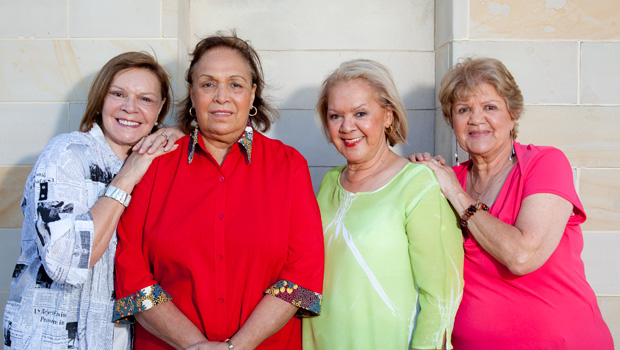
Vanessa Thorpe and Jean Trinh wrote articles about the famous Aboriginal group called, The Sapphires. Both authors interview Tony Briggs whose mother was a member of The Sapphires. The Sapphires was a popular group during the Vietnam War. Tony Briggs’ mother, Laurel Robinson, explains that the amendments of the 1967 Referendum, removed discriminatory sections against the group. “At the time, Aboriginal people were only just granted citizenship. We were only just counted as human beings, really. We were classified as flora and fuana. (2013).” Tony Briggs then added, “Being able to sign papers to allow her daughter, who is Aboriginal, to travel anywhere outside of Australia was very new and fresh (2013).”
It is very surprising that her own daughter wasn’t able to leave the country because of the government’s views on Aboriginal people. The movie, titled after the group, features the group’s trip to Vietnam. One scene in the movie shows the group sing an emotional song after Martin Luther King Jr. was assassinated. The songs they sang were to bring peace and acceptance to the troops (2013).
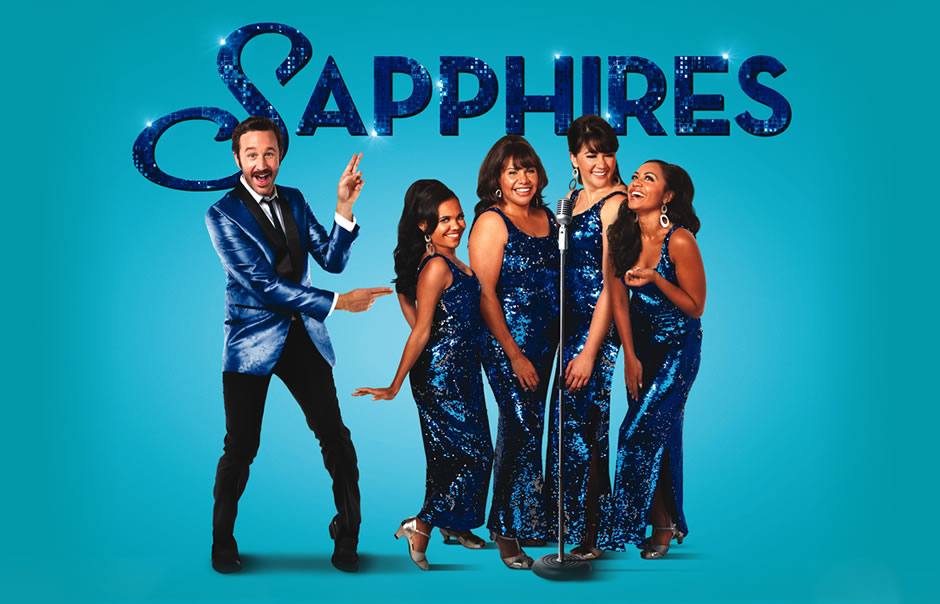
Watch the official trailer for the movie below!
As young Aboriginal women, The Sapphires were role models to many people in Australia. Despite the discrimination they experienced, they were able to stick together and create meaningful music. The director of the film, Wayne Blair, shared the impact the movie had on them. “In Australia in 1968, the racial divide was significant. My own Nana died in 1966 … she died in her own country classified as an outsider (2012).” The music created is presented for the people who are unfortunately, not listened to and portrayed negatively to media, public, and the government. The movie received overall positive reviews.
GJ Breyley is the author of, Pointing to the scoreboard: how Indigenous hip hop keeps talking to white Australia.One group Breyley features is called, A.B. Original. The group had an album come out recently titled, Reclaim Australia.A.B. Original is one of many groups to write songs that start conversations about important topics. They are an Indigenous rap group that focused on white Australia’s black history. The group’s songs focus on police harassment, violence, deaths, and racism (2018). A.B. Original recently released a song titled, January 26. Lyrics from the song include,
“White Aus still got the black history (that’s true)
And that shirt will get you banned from the Parliament.
If you ain’t having a conversation, well then we starting it.”
In the 1980s, Indigenous groups were not as popular as now due to the rise of social media and how music is distributed now. There are even groups that are comprised of people of high school students (2018). That group is called, B-Town Warriors. The B-Town warriors focus on singing about celebrating culture and pride for themselves. Tim Scott interviewed some of the students about their representation. One student said that the main message of the song ‘People of the Red Sunset,’ is about how they have something to be proud of and how it is about the identity of the town and the people. Another student added, “We can make a change. Burke is not that bad either. People put a bad name to it but it’s actually pretty good (Scott, 2016).”
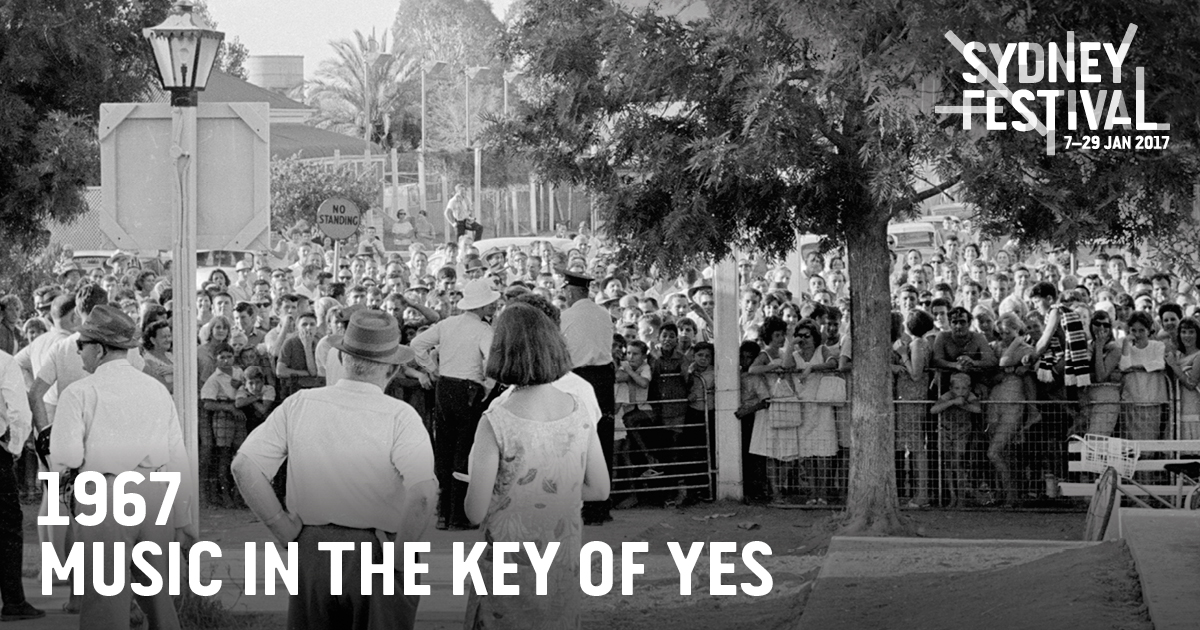
There are issues all around the world. What people do about these issues are extraordinary. Deidre O’Connell provided information about a remarkable night that celebrated Australia’s civil right movement. Music in the Key of Yes, was a concert that was held to mark the 50th anniversary of the 1967 referendum. During this time, many Australians voted “yes” to abolish two discriminatory references in the constitution. “That change allowed the federal government to make laws affecting Aboriginal people and include the count of ‘aboriginal natives’ in the Census (2019).” The concert showcased the songs that represented the civil rights movement. The visuals even had meaning to the concert. O’Connell states that historical footage underscored the depth of racism in White Australia and hinted at the internal divisions within the Aboriginal Civil Rights movement. O’Connel finishes the article with,
“As Michelle Obama recently said, ‘Hope is a necessary concept.’ Even in the face of monumental struggle, despair is not an option (2019).”
Below is a clip of Radical Son performing at the Music in the Key of Yes concert!
All of the artists have a commonality when it comes to their determination. It is their pride within themselves and the strength they have to stick together. In order to find a solution to the problem of discrimination toward Aboriginal or Indigenous people in Australia, I think creating a campaign similar to the concert O’Connel wrote about would be interesting. Instead of having a long concert, there could be a shows throughout the year that artist of all kinds can express their feelings and views on different topics. My last solution is to create a program that helps children understand the importance of their voice. It would be a program that empowers children and teaches them about leadership. As they grow up, the lessons they would learn from the program would be a habit for the lives going into adulthood and beyond.
Focusing on despair will not help anyone or resolve injustices. Staying motivated to seek hope will always open doors to positive effects. In conclusion, learning about Aboriginal musicians and their stories this semester has been an experience I am glad I took part in. There is still so much to analyze and listen to. Taking the time to recognize music around the world brings people together. It also lets people listen to others and their experiences, hopes, hardships, and passions. The musicians included in this post are have paved the way for future musicians all around the world.
Sources:
Bagshaw, Eryk. “These Six Charts Show the State of Discrimination towards Indigenous Australians.” The Sydney Morning Herald,The Sydney Morning Herald, 19 Aug. 2014,www.smh.com.au/national/these-six-charts-show-the-state-of-discrimination-towards-ind igenous-australians-20140729-zy6fa.html.
Breyley, G. (2018, December 06). Pointing to the scoreboard: How Indigenous hip hop keeps talking to white Australia. Retrieved fromhttps://theconversation.com/pointing-to-the-scoreboard-how-indigenous-hip-hop-keeps-ta lking-to-white-australia-88481
Cromb, Natalie. “Australia Is Racist – but not in the way you think.” SBS News,SBS News, 9 Aug. 2017, www.sbs.com.au/nitv/article/2017/08/09/australia-racist-not-way-you-think.
International, S. (2019). Aboriginal people. Retrieved from https://www.survivalinternational.org/tribes/aboriginals
Leber, Sylvie. “Change Is Gonna Come: Aboriginal Music and Activism.” Right Now,27 May 2016, rightnow.org.au/opinion-3/change-is-gonna-come-aboriginal-music-and-activism/.
O’Connell, Deirdre. “Celebrating the Songs of Australia’s Civil Rights Movement.” The Conversation,The Conversation, 10 Jan. 2019, theconversation.com/celebrating-the-songs-of-australias-civil-rights-movement-71480.
Scott, T. (2016, September 19). Watch Bourke’s B-Town Warriors Rep Their Hometown in ‘People of the Red Sunset’. Retrieved fromhttps://noisey.vice.com/en_au/article/gqyg3w/watch-bourkes-b-town-warriors-rep-their-h ometown-in-people-of-the-red-sunset.
 Human Rights, Music, & Resistance