
Haiti is a Caribbean country that shares the island of Hispaniola with the Dominican Republic in the east. The issue that I have been researching on, is the effects of music during political or environmental turmoil in Haiti. Discussing how the people have used music as a coping strategy during a natural disaster, or during issues within the government. Multiple types of music are appreciated in the Haitian community, the most notable ones include, Compas, Rara, and Mizik Rasin.
Compas is one of the oldest and uses a variety of different instruments. Below is a video of one of the most notable Haitian musicians, Wyclef Jean. Traditionally, his music is based in Compas style. Compas is the most commonly used in mainstream Haiti media, it is the most heard on radios.
Rara is ued during religious and celebrations, different types of Rara can be seen at carnivals through out Haiti. In the Catholic tradition, the seven days following Easter Sunday is Easter Week. In Haitian tradition, a brilliant and colorful music festival, takes place throughout this holy week, this is where the genre of rara fits in.
Mizik Rasin is a youth-based genre, and this one is specifically used during government and political protest The lyrics are sung in Creole, they are considered poetic, empowering and the face of resistance. Much of the music mirrors what is going on in society, it helps the members of society to keep up with what is going on, how the feel and finding an outlet to convery those feelings.
Along with that, looking into how different countries reacted to Haiti and how they integrate their own music or beliefs as a way of supporting. Haiti is also known to be a very religious and spiritual country, after the earthquake in Haiti, Haitians sang hymns as a way to cope with the tragedy. One account that was given was a woman who was pulled from the rubble after the earthquake, singing. She was singing a hymn about not fearing death and having faith. When asked about why she was sining, she stated that she didn’t believe that she was going to die. Her faith kept her going and the hymns she sang, reflected that. The article elaborates by speaking about how Haitians use music to cope through trauma, and after the disaster. This article takes into account the affect music had on the citizens at the time
They gathered together walking through the city and singing praises to God, and not being contempt towards the Him. The singing of hymns allows the mourners to direct their anger and thoughts elsewhere and look to a higher power for helpunderstanding that dynamic and how it affects their social environment along with coping skills is important.
A native music Hip-hop group called Sekte Atis Lib were caught in the earthquake and the lead singer MRJ escaped with minor injuries. In the aftermath they discussed having to carry and bury bodies and rebuild some of the area they were located. During their time after the quake they saw and felt the effects that it had on the community and MRJ and the band members delivered an a cappella performance in the shelters. The shelters were made of bed sheets and sticks where children and families were found low-spirited and mournful. This group used the process of writing the music to cope and then performing to help soothe the children who had lost so much.
A celeberity that I focused on in regard to helping during the crisis is, Sean Penn. Penn visited the countrty after the 2010 earthqauke, with an intention for only staying a week.  What he witnessed in the country influenced him so much that Penn started a foundation that supports strengthening communities and helping people that may bevulnerable to crisis. His vision was to see Haiti prepared for the worst-case scenario and the ability to recover and respond accordingly. With his success as a notable actor he was able to bring in donors from his profession to keep the foundation going.
Another notable celebrity is Wyclef Jean, he is a native of Haiti and has always been one of the countries biggest supporters. After the earthquake, he used his music as a way of raising awareness, dedicating an entire album to his experience and his intention of assisting through politics. He also participated in “We are the world: 25 for Haiti” the rendition of the original song, written in support of Haiti to raise money. Jean sang a part in the song in Haitian Creole to send his support in the native language. He also attempted to run for president at one time but wasn’t allowed to due to his residency, nonetheless he has still been diligent in his activism for the country. 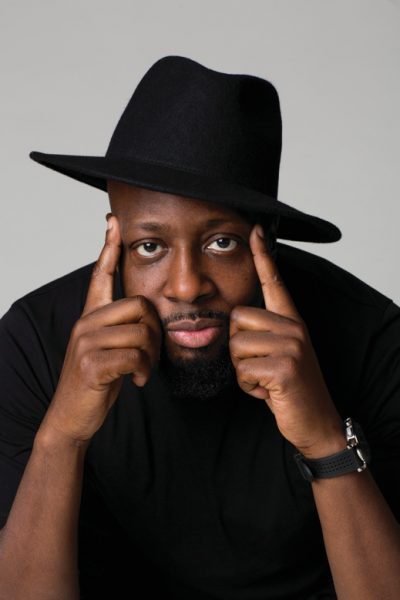 Jean has always been in support of expression through music and acknowledging his native roots as a way to educate others. Jean holds intersectionality with his music and politics. His music extends beyond Haiti, but he remains dedicated in bringing awareness in every area that he has influence. He also took the time to step into areas where he didn’t have a lot of notoriety, that being politics. I wanted to pick two different individuals who had similar goals but came from different backgrounds, representing their diversity in human rights.
As for people who aren’t supportive, a former musician turned president of Haiti, Michal Martelly, formerly known as, Sweet Micky. Martelly used to be a part of a band that sang the musical style of Compas, he was known as being rebellious and used his music as a way to revolt against the government.

After his he took office, he completely changed his views on music. During 2013 he banned 3 main types of music from Carnival, the groups from those genres had created music that accused his government of hypocrisy and corruption. Martelly did this has a way to censor the groups, trying to control the stream of influence during one of Haiti’s biggest holidays. Shockingly, after his time in office he reverted back to his original genre of music, only much more vulgar. In irony, he was banned from Carnival in 2018, due to his vulgar comments and actions after his time in office.
This year, Carnival was canceled in Haiti, by the government. Carnival is an annual celebration held in Haiti every year, around Mardi Gras season. Tradtionally it is a huge celebration and all types of cultures come alive, different types of dress and all types of music, especially Rara, is embraced. When carnival was cancelled it created an uproar in the community, causing many to feel like they had been stripped of their cultural freedom. All of the this was due to the severe political turmoil and riots and protest. The carnival music had actually been geared towards the recent president (who was just put out of office), speaking about how he seems to not know what he is doing, how he hasn’t been doing a sufficient job, and not listening to the citizens. With Carnival being canceled it is another restriction amongst the citizens on expressing how they feel about their country and who is in power. Both are using censorship as a way to control their environment, using their political abilities to do so. Although this hasn’t wavered the actions of the citizens, to express themselves, the restriction and removal of a holiday sacred to them hasn’t been easy. The government has also been known to try and woo different musical artists to promote their ideas, which can fall under censorship as well. The government controls the mainstream media, and through that, they have the power to stream or not stream certain musicians or genres. The utilization of restriction and persuasion is a control tactic, and within human rights, that isn’t abnormal. A common theme within people in power (such as government), is manipulation. That comes in many shapes and forms, and sometimes as microaggressions.
Each of the individuals I have spoken about has had some relation to Haiti in the area of human rights, two of which represented social justice and human rights. The other two representing censorship through the government. What is interesting about all of this, is that Haiti has influenced others in different areas to revolt through music. African Americans have been inspired through the dedication that Haiti’s have displayed throughout history. Most of this coming through kinship and understanding of different struggles. One key importance through music and Haiti through different countries is the “We are the world: 25 for Haiti” As mentioned early, this musical collaboration was revolutionary in bringing to light the catastrophic issues that were happening in Haiti. There were over 30 different musicians that were involved in the productions. Including Haitian artists, but many African American artists; African Americans have a relation to Haitians through struggles and the relation created an atmosphere during the song showing sentiment.
The diversity mirrored the original song and the power it had. When you watch the 8-minute video, you can see the emotion and dedication in their voices and faces. There are clips of citizens in Haiti, still smiling and singing along, holding on happiness in the face of tragedy. That brings into the full circle of what this topic is based on, resilience through music and culture. Haiti has been through many trials, that goes as far back as the revolution, slavery and up until now with the environment and political hardships. Music has always been a common theme, no matter the time. Hardship or not, music is utilized in every portion of their lives, religious, spiritual, school, casual, political, etc. In conclusion, Haiti has support domestically and on an international level, they have shown to not deter from their roots despite what has happened within their country. Haiti also has the power to continuously ring in support from different countries, through their natives and through people who have shown interest. Haiti holds a cultural and social power that has helped them continue their revolution.
In conclusion research for Haiti is a way of giving a different persective into how music is used in different cultures, much of the American culture is mainstream music that almost copies itself every few years. There are times where music is used to protest within America and Gospel is commonly known. These are all separate, but within Haiti, al of their styes of music find a way to intermingle and work together. After the earthquake and with the current political issues that have happened, the community has banded together even further. Through the different types of music discussed and the music that has come from different areas, I think it suffices to say that, music has power. Power is something that the government uses to censor communites and as a way to minipulate. Music holds a much similar power, but it uplifts communites and helps them to band together. Music is a language, it is a form of communication through all parts of the world, some of it stems from poetry and others create with instruments and add the lyrics later. For many, music is the only means of communication with one another and gaining the attention of the public when the government fails to assist. Songs against the government or corrupt people have gone on for over 1500 years, religions have documented the use of Gospel, which hold melodic tones to it. Nonetheless, this is just one piece of a phenomena that is music. Music has outlived government officals, it has moved it’s way through many wars and political turmoils. It has made it’s way through the religions and the mainstream, its influence is undeniable and deserves to be recognized on the same level of power that government has. Finally, I encourage people to further their research on music, expand on how music is used all over the world and maybe it will draw inspiration on how individuals may use music, lyrics, etc., in their lives.
References
Charles, J. (2018, January 31). Former Haitian President Martelly banned from Haiti carnivals – and Trump’s the reason. Retrieved from https://www.miamiherald.com/news/nation-world/world/americas/haiti/article197716859.html
Ferreira, Susana. “How Disaster And Tragedy Spawned A Radical Music Movement In Haiti.” BuzzFeed News, BuzzFeed News, 7 July 2015, www.buzzfeednews.com/article/susanaferreira/haiti-raboday-revolution.
Gates, Emily. “The Impact of Music on Haiti.” Moriah Mayhew, Moriah Mayhew, 2 Dec. 2012, blogs.longwood.edu/musicintheworld/2012/12/02/the-impact-of-music-on-haiti/
“Haiti’s Hymns.” MUSIC AND DISASTER, 12 Dec. 2015, musicanddisaster.wordpress.com/haitis-hymns/.
Joseph, P. E. (2010, January 27). Haiti’s revolt inspired U.S. black activists. Retrieved from http://www.cnn.com/2010/OPINION/01/26/joseph.african.americans.haiti/index.html
Karas, T. (2019, March 06). With no Carnival, Haiti’s musicians lose more than their stage. Retrieved from https://www.pri.org/stories/2019-03-06/no-carnival-haiti-s-musicians-lose-more-their-stage
A sanitised Carnival. (2013, February 15). Retrieved from https://www.economist.com/americas-view/2013/02/15/a-sanitised-carnival
We Are The World. “We Are The World 25 For Haiti – Official Video.” YouTube, YouTube, 12 Feb. 2010, www.youtube.com/watch?v=Glny4jSciVI.
https://www.pri.org/stories/2019-03-06/no-carnival-haiti-s-musicians-lose-more-their-stage
http://www.buzzfeednews.com/article/susanaferreira/haiti-raboday-revolution
https://www.miamiherald.com/news/nation-world/world/americas/haiti/article197716859.html
http://www.buzzfeednews.com/article/susanaferreira/haiti-raboday-revolution
https://www.economist.com/americas-view/2013/02/15/a-sanitised-carniva
 Human Rights, Music, & Resistance