
Aly Hine, May 2019
Topic
My topic focused on the music censorship that was implicated by Adolf Hitler and the Nazi Regime during the Holocaust and how it violated the human right to freedom of expression. Germany, a music powerhouse prior to the Holocaust, changed drastically when Adolf Hitler became chancellor in January of 1933.
What is censorship?
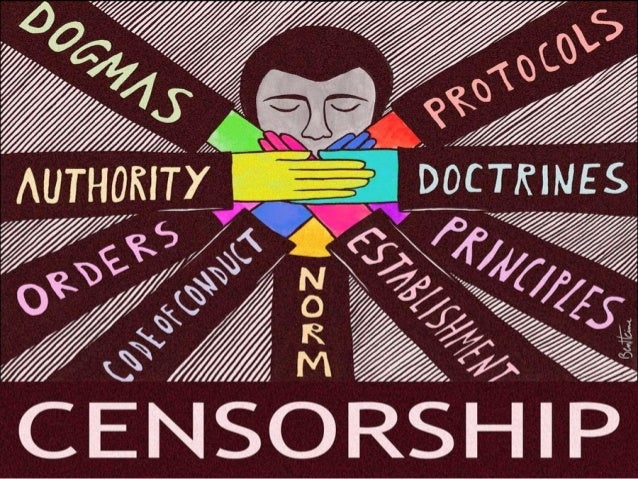
Censorship is the suppression or prohibition of any parts of books, films, news, music etc. that are considered obscene, politically unacceptable, or a threat to society.
Background Information on The Holocaust
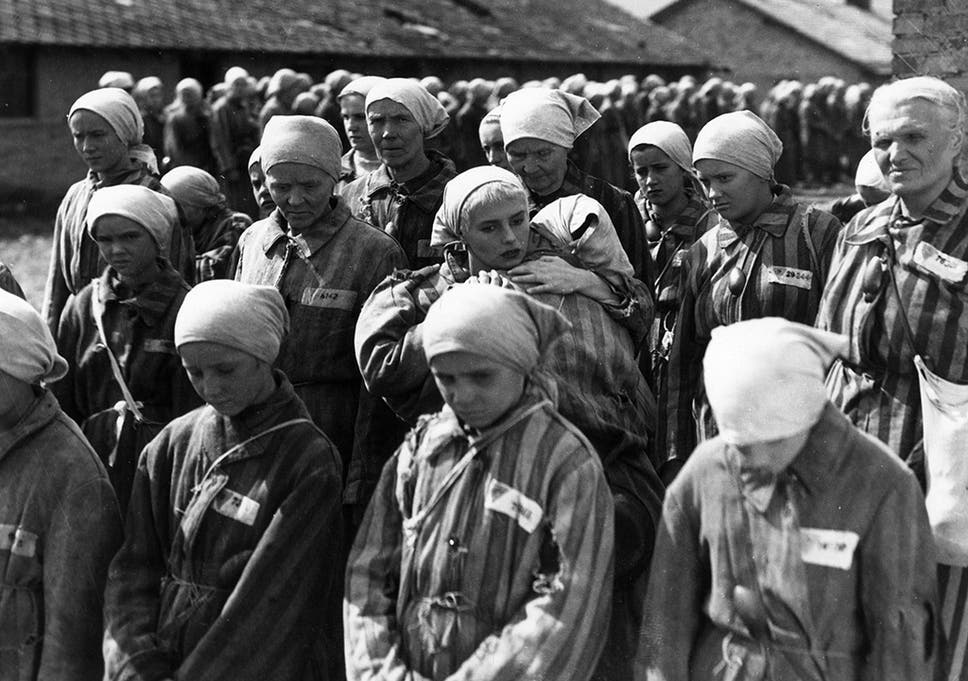
Holocaust can be broken down into its two orginal greek terms “Holo”, which means ‘whole’, and “kaustos”, which means ‘burned’. The Holocaust rooted from anti-semitism, the strong disliking or hatred toward Jewish people. On January 30th, 1933 Adolf Hitler became Chancellor of Germnay. Hitler implemented and worked towards the idea of creating his ‘pure race’, which meant non-Jewish, Aryan race, German people. In March, 1933 the first concentration camp was established and running. On April 1, 1933 the boycott of Jewish-owned businesses and shops in Germany started. On September 15, 1935 the Nuremberg Race Laws were passed, providing a legal basis from the exclusion of Jews from German society and implementing a very restrictive Jewish Policy.
Germany Before The Holocaust
From an artistic perspective, Germany before the Holocaust was very diverse in music. Artists ranged from all different races, ethnicities, and religions and music varied from all different types. Although Germany is known as the classical music capital of the world, being the birthplace of renowned composers like Bach and Beethoven, it was no stranger to folk, jazz and pop music. During this time there were a lot of Jewish people who were excelling in the music industry, some being artists, musicians, composers, and others being successful record label owners and producers.

Germany During The Holocaust
While music was not completely eliminated in Germany, a lot of music was labeled as “Jewish” “degenerate” or “Bolshevik” music, meaning it was not permitted to be played. An exhibition was mounted in Germany called “Entartete Musik” which translates to “degenerate music” and it demonstarted dangers and celebrated the removal of Jews from the music industry.

Music Used as Ideology
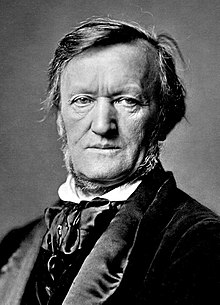
After the Nazi party came to power, the ‘Reichmusikkammer’, or ‘Reich Chamber of Music’ was established. The goal of the Reich Chamber of Music was to improve the situation of Aryan musicians and cleanse the musical scene of Jews, foreigners, and any other artists that went against Hitler’s norms. A prime member of the Reich Chamber of Music was Richard Wagner whos music was considered tainted with ideological association of the Third Reich. Hitler was quoted saying he felt a ‘deep connection’ to Wagner as he claimed to his own vision of future Germany was evident within his music.
Musicians/Composers Banned During The Holocaust
Some musicians and/or composers who were banned consisted of Arnold Schoenberg, Kurt Weill, Erich Korngold, Ernst Kreneck, and Paul Hindemith. The most notable musician banned is Arnold Schoenberg who was actually exiled from Germany because his work was considered “Bolshevik”. He eventually found his was to the USA in Los Angeles California where he leanred the English language and continued to produce work that exposed what was occurring over in Germany to the general population. One of his most popular works is his song “A Survivor from Warsaw”, which ended up being banned in Germany, in which Schoenberg presents the audience with a fictional representation of the Warsaw ghetto uprising and uses musical and textual devices to depict the labours of traumatic memory.
InFocus Town Hall
The InFocus Town Hall was an eye-opening experience as it showed that although a group of people can have topics that vary from different subjects, there is always a common ground or underlying theme that can somehow and someway connect all of us and our research. I was able to sit down with my peers and expand and think more critically about my topic than beforehand and also gain new information from what was researched from my fellow peers.

Conclusion
Overall music in Germany changed drastically due to the censorship enforced from the Nazi Regime and Adolf Hitler. Music was manipulated into furthering Hitler’s idea of a ‘pure’ country and made any Holocaust victim feel inferior on the system of a racial hierarchy. This class and the semester spent studying and researching my topic allowed me to understand music on a whole new level. Before this class music was an every-day-thing to me, it was nothing more than something I listened to in the car, at the gym, or while studying. After this class I’m able to understand music on a deeper level and just how powerful and impactful it is and can be.
Works Cited
“The Holocaust.” History, A&E Television Networks, 14 Oct. 2009, http://www.history.com/topics/world-war-ii/the-holocaust.Merriam-Webster. http://www.merriam-webster.com/dictionary/music.
“Nazi Approved Music.” A Teacher’s Guide to the Holocaust, U of South Florida, fcit.usf.edu/holocaust/arts/musreich.htm. Accessed 13 Feb. 2019.
Fackler, Guido. “Music in Concentration Camps 1933–1945.” Music & Politics, 1st ed., version 1, Michigan Publishing, quod.lib.umich.edu/m/mp/9460447.0001.102/–music-in-concentration-camps-1933-1945?rgn=main;view=fulltext.
Geisler, Ursula. “Political Music Censorship: Some Remarks on Nazi Music Regulations 1933-1945.” Danish Musicology Online, DMO, 2015, http://www.danishmusicologyonline.dk/arkiv/arkiv_dmo/dmo_saernummer_2015/dmo_saernummer_2015_musikcensur_04.pdf.
Metzger, Jackie. “The Third Reich: Classical Music and the Nazi Leadership, 1933-1945.” Yad Vashem the World Holocaust Remembrance Center, http://www.yadvashem.org/articles/general/reich-music.html.
“Music in the Third Reich.” Music and the Holocaust, World ORT, holocaustmusic.ort.org/politics-and-propaganda/third-reich/.
“The Third Reich and the Theft of a Musical Legacy.” Yad Vashem the World Holocaust Remembrance Center, http://www.yadvashem.org/articles/general/musical-legacy.html.
Neuschwander, DeLora J. “Music in the Third Reich.” Musical Offerings, 3rd ed., version 2, Cedarville University, 2012, file:///Users/alyhine/Downloads/Music_in_the_Third_Reich.pdf.
United States Holocaust Memorial Museum, United States Holocaust Memorial Museum, encyclopedia.ushmm.org/content/en/article/victims-of-the-nazi-era-nazi-racial-ideology.
http://holocaustmusic.ort.org/resources-references/student-guide/before-the-holocaust/
http://holocaustmusic.ort.org/resources-references/student-guide/music-as-ideology/
 Human Rights, Music, & Resistance