
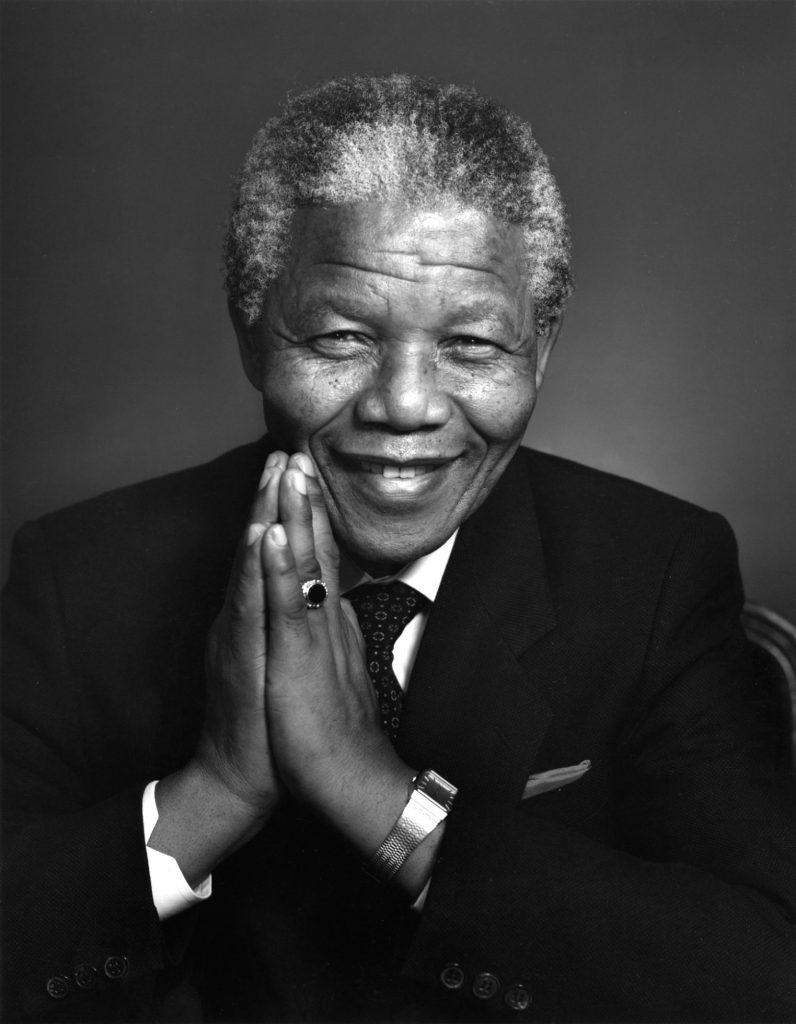
When one gauges the effectiveness of a song which protests for its own people, it is true that it is a more slippery responsibility in achieving results. Nelson Mandela has been an icon over the years since he was involved in South Africa’s apartheid struggle. It is currently almost inconceivable since Nelson Mandela’s name was not popular outside South Africa. 46664 was the number referring to the series of concerts which were held in the process of honoring Nelson Mandela (Crwys-Williams, 2011).The process took place between 2003 and 2008 in honor of the struggle which the leader went through in the process of delivering freedom to his country from the apartheid rule. The apartheid rule was a period which needed a lot of campaign and protests from the anti-apartheid protesters in order to end the regime which looked down upon the black people
in South Africa. ‘
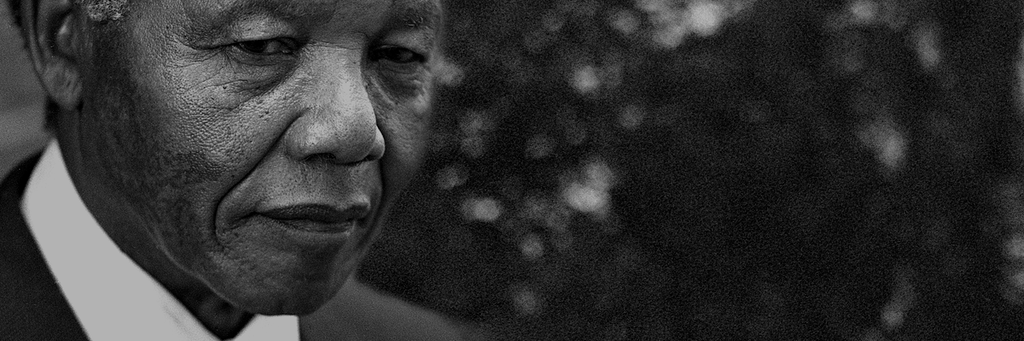
The imprisonment of Mandela took place on Robben Island at which he was imprisoned for 25 years. He was imprisoned in 1964 as the 466th prisoner. He was given the prison number 466/64 until the year 1982. This marked the development of the 46664 slogans. This number has since turned out to be very famous in South Africa. It has been used as a title which is reverential for Nelson Mandela. The song “46664” was explicitly written to represent the campaign the existence of AIDS in Africa. Concerts were held with the title 46664 in Cape Town to
represent the memory of the struggle of Nelson Mandela
An event was held which was known as the 46664 concerts in 2003. The concert took place at Green Point Stadium (Clinton et al., 2006). The host of the event was Nelson Mandela, and the primary goal for the concert was to raise awareness about the rapid spread of the deadly disease of HIV/AIDS which had widely spread in South
Africa.
Music had now become one of the most crucial ways in which the struggle against apartheid was effected. The music brought about a feeling of unifying movement which proved to be very effective in the anti-apartheid movement which was the main topic in South Africa. An ANC leader who was also a songwriter known as Vuyisile Mini also wrote some of the most inspiring freedom songs which played a significant role in the anti-apartheid struggle in South Africa. It was later discovered that some western musicians had taken a stand against the apartheid rule. This was for the reason of standing in solidarity of their fellow musicians. At this point in time, Apartheid was seen to be a niche interest. The 46664 songs had revolutionized the music industry in South Africa. Most musicians identified themselves with the struggle to end the apartheid rule (Meyer, 2017).
Steve Biko was the first person who had been the icon of the anti-apartheid rule. The young, energetic leader stood for the radical black movement. He was able to inspire songs from the singer Tom Paxton and Peter Hammill. He also inspired other musicians who produced reggae songs that promoted the anti-apartheid struggle. After his death, a song was produced in honor of his contribution to the anti-apartheid struggle. The song was known as “Biko” which was a protest song. The song was produced by an English musician known as Peter Gabriel. It is also one of the most famous musical eulogies which were directly inspired by the death of Steve Biko. He died while in police custody in 1977. Gabriel was inspired to produce the song after he heard about the death of Steve Biko. The 46664 was like a movement which inspired musicians worldwide to give a helping hand in the struggle of liberating South Africa from the apartheid oppression. “Biko” performed well on the British charts at it was debuted at no. 38. It was positively received, and it acted as an instrument of liberation for the South African people. The song inspired a variety of musical projects in South Africa and Africa at large (Meyer, 2017).
In conclusion, it can be averred that the 46664 songs were one of the main instruments in which Nelson Mandela’s struggle against apartheid was achieved. The songs were able to generate a massive movement which successfully caught
the attention of the perpetrators of the condemned rule. This gave rise to freedom which was achieved mainly because of the 46664 movements. For this matter, the awareness which was generated could not have been possible without the songs of the 46664. The anti-apartheid movement has since become the most significant movement in history which was geared towards anti-oppressive rule from the western leaders. The songs which were used in the movement became most iconic since through the results which were achieved. This also brought rise to some of the most celebrated artists in South Africa for instance, Hue Masekela. She released songs which became instant anthems which called for the immediate release of Nelson Mandela. Miriam Makeba also joined in the movement and released the famous “Soweto Blues” which joined in other voices which were strongly contributing to the release of the iconic leader.
the song
References
Clinton, F. P. B., & Lecture, N. M. A. (2006). Soldiering on: the post-presidential years of Nelson Mandela 1999–2005. Leadership Change and Former Presidents in African Politics, 26.
Crwys-Williams, J. (2011). In the words of Nelson Mandela. Bloomsbury Publishing USA.
Meyer, S. (2017). Nelson Mandela: South African President and Anti-Apartheid Activist. The Rosen Publishing Group, Inc.
Bibliography
Clarke, M. & Bassett, C. (20016). The Struggle for Transformation in South Africa: Unrealized Dreams, Persistent Hopes. Journal of Contemporary African Struggle, 34 (2), 183-189.
In this research, the authors explore how the liberation of South Africa took a longer period of time as compared to that of other countries. They attribute the delay to various aspects including the role of national and international actors. They also describe how apartheid perpetuated various social ills including dispossession and social inequality. The resource is useful for the study because it explains the measures that the population undertook to liberate itself from apartheid. In particular, it focusses on the role of political leaders, women, human rights groups, and social movements.
Crwys-Williams, J. (2011). In the Words of Nelson Mandela. New York: Walker Books.
In this resource, the author compiles a selection of observations that were made by Nelson Mandela regarding freedom, oppression, and friendship from various sources. The quotations are a reflection of his philosophy of humanity and the values that he stood for. The inspiring and thought-provokingmessages conveyhis dignity and warmth and empower readers in different ways. The resource provides useful guidelines for fighting the oppressive rule. It highlights the measures that the iconic figures used to fight oppressive tendencies.
Downing, D. (2004). Apartheid in South Africa.London: Heinemann.
The author provides an in-depthanalysis of the historical forces that contributed to apartheid. Then, he shows the struggles that South Africans experienced under apartheid. Finally, the book documents the efforts that caused the end of the repressive rule. By highlighting the contributions of various parties to ending apartheid, the resource provides useful information regarding the oppression. In addition, analysis of the historical forces and comprehensivedocumentation of its development provide important background study regarding the rule.
Gordon, D. (2017). Apartheid in South Africa. New York: Bedford
The author addresses the rise, development, and the fall of ethnic and racial segregation in South Africa. He presents a wide range of primary documents that demonstrate the development of the repressive rule. These include speeches, government documents and different records of meetings. The resource is useful because it explores the forms of resistance that locals employed to end the rule. The chronology of events enables leaders to formulate questions for consideration.
Olzak, S., Beasley, M. & Olivier, J. (2003). The Impact of State Reforms on Protest Against Apartheid in South Africa. An International Quarterly, 8 (1), 27-50.
In their research, the authors show how reforms led to increased protests in South Africa. They ascertain that the entire population was discontent with apartheid. They explore different forms of reforms and the implications that they had for individuals from different races. They conclude that repression decreased protests by black Africans, Asian Indians, andColored. The article is informative and relevant for the study because it explores reforms as one of the approaches to overcoming oppression. It also explains how individuals from different races were affected by the repression and the forces that facilitatedtheir involvement in protests.
Woods, D. (2017). Biko: The Powerful biography of Steve Biko and the Struggle of BlackConsciousness Movement.New York: Independently Published.
In this review, the author shows how the rule of apartheid led to the cruel murder of Steve Biko. Woods describes Biko as a patriotic individual who lost his life to saveSouth Africa. He shows how the rule of apartheid was dominated by fear and greed. The book is an actual reflection of the struggle of patriots to deliver South Africa from oppression. Just like Nelson Mandela, Biko was committed to helping the Black population to overcome the challenges of the White supremacy. The biography cites specific strategies and approaches that Biko engaged and how they contributed to his murder.
 Human Rights, Music, & Resistance